
Chinese Opera is a highly rated art form in China and Hong Kong, that amalgamates Chinese legend, music and drama into an exhilirating style of art. In simple words, Chinese Opera is a story put to music and dance. Any tourist in Hong Kong trying to experience something different can watch Chinese Opera, also known in Hong Kong as Sunkung Opera.
Modern Day Chinese Opera
Chinese Opera of modern days has begun experimenting with Western plays. After 1919, a number of western plays were staged in China, and Chinese artists unified this form with their plays. Symphony Orchestra also accompanies the opera now, adding to it the spice of modernisation. New stories have also been expressed by the Opera artists.
Various Styles of Chinese Opera
Different factors have their influence on Opera and it is natural that the style varies with the region. Landscape, culture, environment, both natural and political, play part in defining the style of Opera. The Cantonese style opera highly differs from those of Chiu Chow. Chinese operas are played in more than 300 forms now, and the most famous of these is Beijing Chinese opera.
Origin
The standard opera is based on folklore, legends, and historical incidents from the past. Opera emerged in the reign of the Song Dynasty (960-1279). During the 18th Century, in the imperial court in Beijing, festivals and state occasions witnessed Chinese Opera. 'Pear Garden', a group which performed for the emperor, was the first known opera troupe in China. Gradually, the Opera gained popularity among common people.
Artists & Instruments
Artists of consummate skills are behind elaborate operas. The artists acquire the required skills after years of comprehensive training. The performing artists are supported by conventional Chinese orchestra. String, wind and percussion, all three types of musical instruments support the artists. Of late, western musical instruments have also been introduced to Chinese opera.
Costumes
Elaborate costumes are worn by opera performers. Very often, heavy painted masks are used. Otherwise also, excessive makeup is used. Cumbersome head-dresses are also a feature of the operas. More detailed head-dress hints on the importance of the character in the opera. The costumes of opera artists are exquisitely embroidered.
Minggu, 23 Maret 2008
Hongkong Culture :Chinese Opera
Jumat, 21 Maret 2008
Vacation In China :Great Wall Review

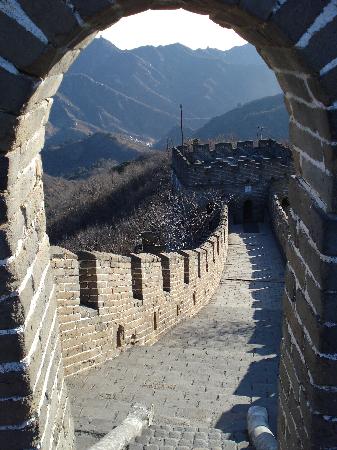
I highly recommend visiting Mutianyu. We went in winter and it was snowing. The views are stunning and the climb provides excellent views. My sister has also visited Badaling and said Mutianyu was far better to visit because Badaling is overcrowded with tourists and has lost its authenticity due to reconstruction of the wall to make it easy for tourists to climb.
At Mutianyu, we only shared the wall with a handful of tourists. We considered visiting Simatai or Jinshanling but we were told Simatai's steps are far steeper and harder of climb (not great if you're afraid of heights) and Jinshanling is much further away.
In terms of how to organise, we did it through our hotel (Park Plaza Beijing Wangfujing) at a cost of 420RMB per person. It included transport in a car with a driver, an English-speaking guide and lunch.


 Postingan

